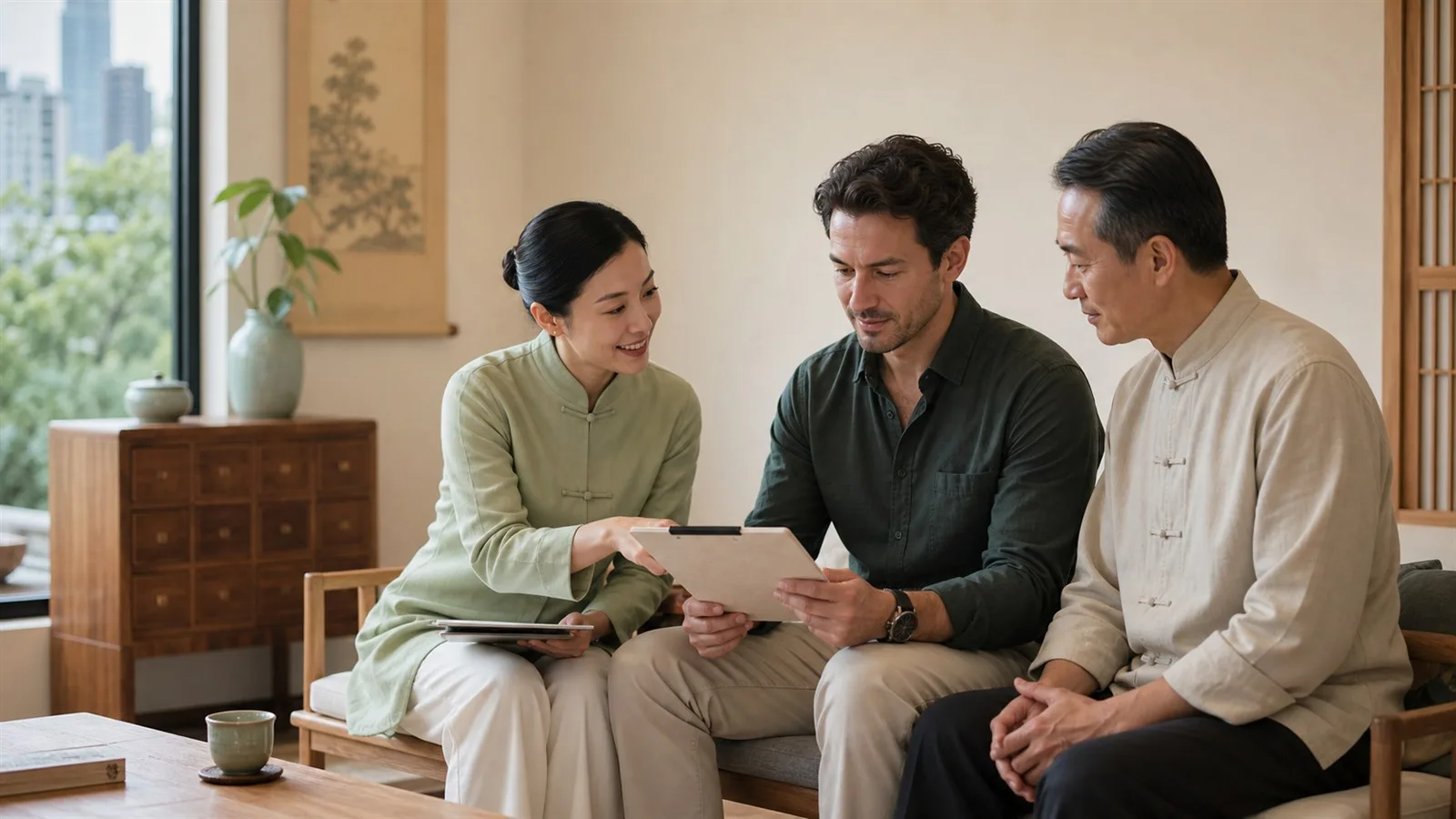
A traditional Chinese medicine (TCM) visit in Shanghai may involve unfamiliar questions, different product names, and a conversation across languages. A simple one-page health note can make that conversation clearer. It is not a self-diagnosis, a consent form, or a substitute for a qualified practitioner’s assessment. It is a practical record of facts you want the practitioner to see before you decide whether any service is right for you. The most useful note is short enough to scan and specific enough to prevent guessing. Save it on your phone and, if convenient, carry a printed copy. Keep the original English terms alongside any Chinese translation so names and doses can be checked. ## Start with one clear reason for the visit Write one or two sentences describing what you want from the appointment. You might be curious about a cultural wellness experience, want to discuss relaxation, or have a health concern that should be assessed by an appropriately qualified professional. Include when any symptom began, what makes it better or worse, and whether it is changing. Avoid converting your own description into a TCM diagnosis. Terms such as qi, heat, cold, or dampness belong to a traditional interpretive framework; they should not be treated as laboratory findings or certainty. Let the practitioner explain how they use those concepts and what remains uncertain. ## Build a compact health-information list Use these headings. The Chinese labels can help staff understand the structure, but they do not replace professional interpretation. - **Main concern / 主要关注:** your goal or symptom in plain language. - **When it started / 何时开始:** a date or approximate timeline. - **Medicines / 药物:** prescription and over-the-counter products, with generic name, dose, and how often you take each one. - **Herbs and supplements / 中草药和保健品:** teas, powders, vitamins, and other products you use regularly or recently. - **Allergies or previous reactions / 过敏或既往不良反应:** include what happened, not only the product name. - **Relevant conditions and procedures / 相关疾病和手术:** facts that could affect a proposed service. - **Pregnancy or breastfeeding / 怀孕或哺乳:** include this when relevant. - **Communication preference / 沟通偏好:** English-speaking practitioner, bilingual support, slower explanation, or written instructions. - **Emergency contact / 紧急联系人:** optional for an ordinary wellness visit, but useful during travel. The 2026 CDC Yellow Book advises international travellers to keep a list of medicines and associated conditions readily accessible. It also recommends using generic medicine names because brands and formulations can vary between countries. Do not stop, replace, or change a prescribed medicine merely to prepare for a TCM appointment. If you are unsure what to write, copy the information from the original label or ask the clinician who prescribed it. ## Include every herb and supplement “Natural” does not mean interaction-free. The U.S. National Center for Complementary and Integrative Health notes that herbs can change the effects of some medicines, while information about many potential interactions remains limited. Its TCM guidance also describes safety concerns reported with some Chinese herbal products, including contamination, undeclared ingredients, and substitution errors. That does not mean every herbal product is unsafe. It means the practitioner needs an accurate list, and you should ask for the product name, ingredients, purpose, directions, expected duration, and known risks before taking anything. Share the proposed formula with the clinician or pharmacist responsible for your existing medicines when interaction risk is a concern. ## State how you want the conversation handled Language support should improve understanding, not blur responsibility. A concierge or interpreter can help with logistics and communication, but diagnosis and treatment decisions belong to qualified practitioners. Ask the practitioner to speak directly to you, pause for questions, and explain any proposed service before you agree. Useful phrases for your note include: “Please explain the purpose, risks, alternatives, and cost before we begin”; “I would like time to decide”; and “Please give me written aftercare instructions.” A translation app can help with simple words, but medicine names, consent, and urgent symptoms deserve confirmation by a person who understands the context. ## Ask five questions before any next step 1. Who will provide the consultation or service, and what is their professional role? 2. What exactly is proposed today, and is it optional? 3. What are the practical risks, alternatives, and aftercare instructions? 4. Could the service or product interact with my medicines, conditions, pregnancy, or allergies? 5. What is included in the price, and can I decide after the consultation? China’s Law on Basic Medical and Health Care states that people receiving medical and healthcare services have a right to information about diagnosis, therapy plans, medical risks, and expenses, and it addresses consent for surgery, special examination, or treatment. The same law calls for dignity and privacy. Exact procedures still vary by institution and service, so ask how notes, photographs, or other personal information will be used and stored. The World Health Organization’s Patient Safety Rights Charter likewise emphasizes information, supported decision-making, privacy, qualified staff, and patient engagement. These principles are useful even when you are approaching TCM mainly as a cultural or wellness experience. ## Keep the note in perspective A one-page note cannot make a service suitable or guarantee an outcome. It can reduce omissions, help a practitioner ask better questions, and give you a clearer basis for deciding. Do not use a wellness booking to replace or delay appropriate medical care, especially for severe, sudden, or worsening symptoms. EXPAT OG can help international guests confirm the setting, practitioner details, language support, timing, and quoted price before they decide. Clinical assessment and treatment decisions remain with qualified practitioners. Interested in a guided TCM experience in China? Tell us what you are considering, and we will help confirm the practical details without pressure to book. [Request a booking](https://tcm.expatog.com/en/book)
A Bilingual Health Note for Your TCM Visit in China
Prepare a one-page note of medicines, allergies, health context, and communication preferences before a TCM appointment in Shanghai or elsewhere in China.